


Blog · Carpet Materials
Olefin Carpet: Pros, Cons, and Where It Actually Works
You see "olefin" on a carpet label and the price looks great compared to nylon. But before you buy, there is one thing most carpet salespeople never tell you: olefin resists water-based stains better than almost any fiber on the market, yet absorbs cooking oil and grease like a magnet. Install it in the right room and it lasts years. Install it in the wrong one and it looks permanently dirty within months no matter how often you clean it.
Published October 8, 20269 min read
This guide explains what olefin actually is, why its strengths work the way they do, and exactly which rooms it belongs in.
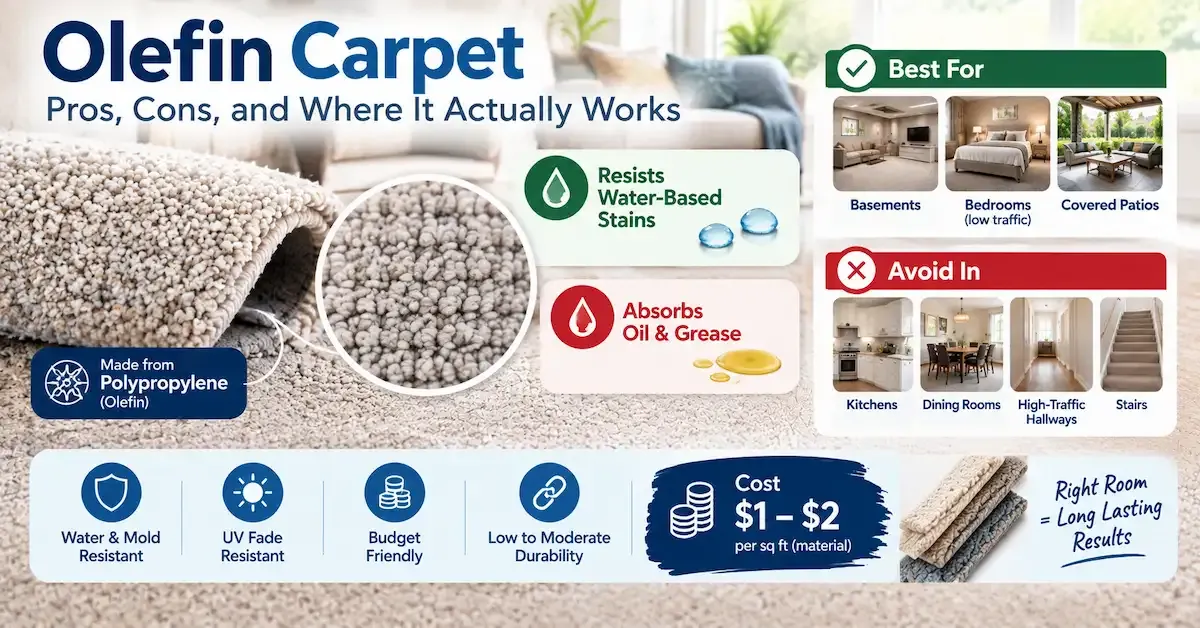
Olefin carpet is a synthetic fiber made from polypropylene plastic. It resists water, moisture, mold, and UV fading well. Its weaknesses are low resilience under heavy foot traffic, oil absorption, and heat sensitivity. It averages around $1 to $2 per square foot in material cost, making it the most affordable synthetic carpet fiber available.
Olefin Carpet at a Glance
| Factor | Detail |
|---|---|
| Also Called | Polypropylene, poly carpet, olefin fiber |
| Made From | Petroleum-derived thermoplastic |
| Cost | $1 to $2 per sq ft material; nylon runs $3 to $7.50 |
| Stain Resistance | High for water-based, very low for oil-based |
| Durability | Low to moderate; best in level loop or Berber |
| Best Rooms | Basements, low-traffic bedrooms, covered patios |
| Avoid In | Kitchens, dining rooms, high-traffic hallways, stairs |
What Is Olefin and Is It the Same as Polypropylene?
It is a synthetic carpet fiber made from polypropylene, a petroleum-derived thermoplastic. Olefin and polypropylene are two names for exactly the same fiber. Manufacturers and retailers use both terms interchangeably, which creates real confusion for buyers. If a carpet label says polypropylene, it is olefin. If it says olefin, it is polypropylene. There is no difference.
What is olefin made of at the fiber level? The polypropylene plastic is melted, extruded into strands, then solution dyed. Solution dyeing means the color is blended into the liquid plastic before it hardens into fiber, not applied to the surface afterward. That is why 100% olefin can withstand bleach without losing color. There are no open dye sites on the fiber for stains to bond to.
The term 100% olefin on a label means the carpet contains no blended fibers. Some manufacturers mix olefin with nylon to improve resilience. A 100% olefin carpet has maximum moisture and UV resistance but lower bounce-back than a blend.
What Are the Pros of Olefin Carpet?
Olefin's advantages come directly from its chemistry. The fiber is hydrophobic at the molecular level, meaning it repels water rather than absorbing it.
That hydrophobic nature delivers three real benefits. Water-based spills bead on the surface rather than soaking in, giving you more time to clean before a stain sets. The fiber dries quickly after getting wet, so it resists mold and mildew better than almost any other carpet material. And because it is solution dyed rather than surface dyed, it holds its color against UV light longer than most synthetic alternatives. A covered patio or sunroom with direct sun exposure is a good match.
Cost is the other major advantage. Family Handyman reports olefin averages around $1.50 per square foot, compared to nylon at $3.25 to $7.50 per square foot. That price gap is why olefin is the second most popular carpet fiber in the United States despite its durability limitations.
What Are the Cons of Olefin Carpet?
The same chemistry that makes olefin water-resistant creates its biggest weaknesses.
Olefin is oleophilic, meaning it chemically attracts oil. While water-based liquids roll off the fiber, oil-based substances bond to it at a molecular level. A homeowner who puts this fiber in a kitchen finds within months that the area near the stove has darkened permanently from cooking oil that drifted through the air and settled into the fibers. Professional cleaning helps only partially because the oil and fiber are chemically bonded.
Low resilience is the second weakness. Unlike nylon, which springs back after being compressed by foot traffic, olefin stays flat once pressed down. This is why it performs best in level loop or Berberconstruction where the loop structure prevents the fiber from crushing, and fails quickly in cut pile styles like plush or Saxony.
Heat sensitivity is the third. Olefin has a low melting point for a carpet fiber. Dragging heavy furniture across it generates enough friction heat to permanently scorch the surface, leaving marks that cannot be repaired. Always lift furniture rather than drag it.
Where Does Olefin Carpet Work and Where Does It Fail?
Best fits:
Basements are the strongest match. Olefin dries fast, resists mold, and handles moisture that would damage other fibers. Homeowners with finished basements that occasionally take on water report it holds up reliably where wool or nylon might develop mildew.
Low-traffic bedrooms and home offices work well, especially in a Berber or level loop construction where the loops prevent premature crushing.
Covered patios and sunrooms suit olefin's UV resistance and moisture tolerance. Olefin area rugs and olefin outdoor fabric products are widely available precisely because this fiber handles outdoor exposure better than most.
Where to avoid:
Kitchens and dining rooms are the worst choice. Any cooking environment where grease and food oils are regularly airborne will cause olefin to soil quickly and permanently, no matter how clean the household is.
High-traffic hallways and stairs are also wrong for this fiber. Olefin rugs placed in hallways tend to show permanent wear patterns within one to two years because the fiber crushes and mats under constant foot traffic faster than nylon or even polyester.
Olefin vs Nylon vs Polyester
| Factor | Olefin | Nylon | Polyester |
|---|---|---|---|
| Resilience | Low | Highest | Moderate |
| Water Stain Resistance | Excellent | Good with treatment | Good |
| Oil Resistance | Poor, oleophilic | Better | Moderate |
| UV Fade Resistance | Excellent, solution dyed | Moderate | Good |
| Mold and Moisture Resistance | Excellent | Moderate | Good |
| Heat Sensitivity | High risk, low melt point | Low risk | Moderate risk |
| Material Cost Per Sq Ft | $1 to $2 | $3 to $7.50 | $1.50 to $6 |
| Lifespan in Low Traffic | 5 to 10 years | 10 to 20 years | 5 to 15 years |
Is Olefin Carpet Safe and How Do You Clean It?
Is olefin safe? Yes. Polypropylene is chemically inert once manufactured. It does not off-gas VOCs or leach chemicals under normal residential use. It is widely used in children's products, food packaging, and medical devices for exactly this reason. The solution dyeing process also means no residual dye chemicals sit on the fiber surface.
For cleaning, water-based spills are straightforward. Blot immediately and they rarely set because the fiber repels liquid at a molecular level. Oil-based stains are a different matter. They often require professional hot water extraction, and some bonded oil soil cannot be fully removed regardless of method.
Use a suction-only vacuum or raise the beater bar to its highest setting to avoid abrading the fiber. Always tell a professional cleaner the carpet is olefin or polypropylene before they start, because high-heat steam cleaning can distort the fiber permanently due to its low melting point.
Common Questions, Answered
Is olefin carpet the same as polypropylene?
+
Yes, completely. Olefin and polypropylene are two names for the same petroleum-derived synthetic fiber. Manufacturers, retailers, and product labels use both interchangeably.
Is olefin carpet toxic or safe to use at home?
+
Olefin is safe. Polypropylene is chemically inert, does not off-gas VOCs, and is one of the most widely approved materials in consumer products globally.
What does 100% olefin mean on a carpet label?
+
It means the fiber contains no blended materials. Pure olefin has maximum moisture and UV resistance but lower resilience than olefin-nylon blends. For high-traffic areas, a blend performs noticeably better.
Can olefin carpet be used outdoors?
+
Yes, in covered or semi-outdoor spaces. Its UV fade resistance and moisture tolerance suit covered patios and sunrooms well. Fully exposed outdoor areas with standing water are not appropriate for any carpet fiber long term.
How long does olefin carpet last?
+
In low-traffic rooms with Berber or level loop construction, 5 to 10 years is typical. In high-traffic spaces or cut pile styles, visible wear can appear within 2 to 4 years.
What is the best way to clean olefin carpet?
+
Blot water-based spills immediately. Use a suction-only vacuum or raise the beater bar height. For professional cleaning, tell the cleaner upfront it is olefin or polypropylene so they control water temperature and avoid high heat.
Is olefin carpet good for pets?
+
Mixed. Pet urine accidents are water-based and clean up easily if treated promptly. Pet-related skin oils and paw oils will soil the fiber over time. For homes with multiple pets, nylon with a moisture barrier pad is a more reliable long-term choice.
Can olefin area rugs be used in high-traffic hallways?
+
Not ideally. The fiber's low resilience means it mats and crushes faster than nylon under constant foot traffic. Olefin rugs in hallways typically show permanent wear patterns within one to two years.
Why does olefin attract oil stains if it is stain-resistant?
+
The stain resistance applies only to water-based liquids. Olefin is oleophilic, meaning oil molecules bond chemically to the fiber surface. This is the opposite of its water behavior, and it is the fiber's primary practical weakness in residential settings.
How much does olefin carpet cost per square foot?
+
Material runs $1 to $2 per square foot. Installation adds $1 to $3 per square foot on top. It is consistently the lowest-priced synthetic carpet option, typically half the cost of comparable nylon.
Olefin carpet belongs in specific rooms and fails in others, and the difference comes down to one thing: whether the space involves oil. Moisture, sun, and water-based messes it handles well. Oil from cooking, skin, or machinery it cannot. Match the fiber to the room, and it performs. Put it where oil is present, and no cleaning schedule will save it.
If you are in the Las Cruces NM area and need help cleaning or maintaining your carpet, our team is ready to help.

Michael Sanders
Michael Sanders is a home care and cleaning industry writer covering carpet maintenance, flooring care, and household cleaning practices across the United States. His work focuses on practical, research-backed guidance — from stain and odor removal to deep extraction methods and indoor allergen prevention. Michael collaborates with cleaning professionals to ensure accuracy, and his writing reflects a genuine interest in helping homeowners make informed decisions about caring for their homes.
Have Olefin Carpet That Needs Care?
We know which cleaning methods work safely on olefin and which ones can damage it. Serving Las Cruces, NM and the surrounding areas.
Call Now — Free Quote